
Who Can Play, And What This Page Is For
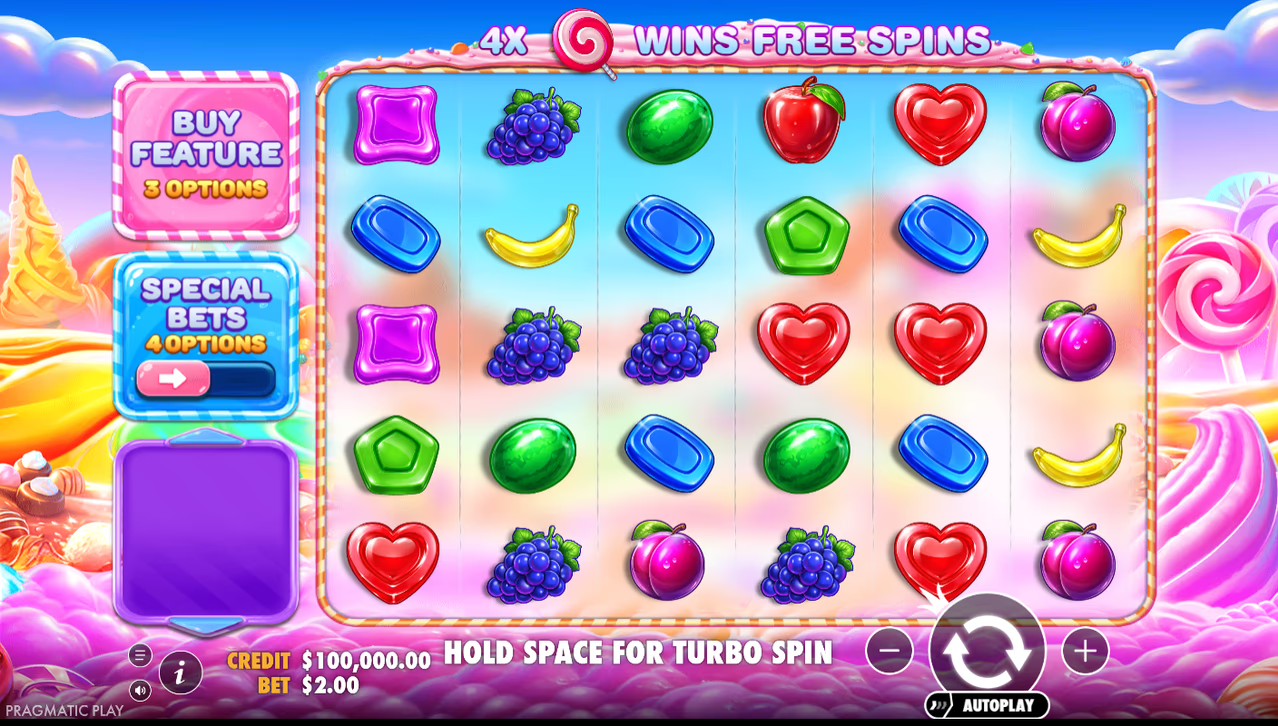
Sweet Bonanza 2500 is available to players 19 or older across most of Canada, and 18 or older in Alberta, Manitoba, and Quebec. This page does not tell you to play — it tells you how to keep play under control if you choose to. The game runs on a high-volatility 6x5 scatter-pay grid with a reported RTP around 96.52%, and its tumble mechanic can produce fast, uneven sessions where nothing lands for a while and then several wins tumble in a row. That rhythm is exactly why a plan set before you start matters more than a plan made mid-session.
Set Your Limits Before You Spin
High volatility means longer stretches without a win between tumbles, followed by clusters of wins that can feel bigger than they are. Sweet Bonanza 2500's cap sits at 25,000x stake, but that ceiling says nothing about what a typical session looks like — it only describes a rare outcome. Treat the number as a curiosity, not a target for tonight's budget.
Before you open the game, decide on an amount you're fully prepared to lose and nothing more. Write it down or set it in the casino's deposit limit tool rather than keeping it as a mental note — mental notes are the first thing that slip once a few tumbles go your way.
If bonus buy options are offered on the site you're using, they can cost several hundred times your stake in a single purchase. Decide in advance whether that spend fits inside your session budget at all, and if it doesn't, skip it rather than adjusting the budget to fit the purchase.
Set a time limit alongside the money limit. A session timer or an alarm on your phone works fine — the point is to have something external decide when to stop, so the decision isn't made in the middle of a multiplier symbol landing.
Pick a stopping rule before you start and follow it regardless of how the last few spins went: stop at your loss limit, stop at a modest win target, or stop when your time is up. Chasing a losing session past that point rarely improves it, and on a slot built around big multiplier swings, it's an easy trap to fall into.
Recognizing When To Step Back, And Where To Get Help In Canada
A few signs are worth noticing in yourself: playing past your planned stop to win back losses, increasing bets after a losing streak to catch up, borrowing money to keep a session going, or feeling the need to hide how much time or money you've spent. None of these are about willpower — they're cues to pause and reassess, not to push through.
In Canada, self-exclusion programs are run provincially and by Indigenous gaming authorities such as Kahnawake, so the process and minimum age can differ depending on where you are — 18 in Alberta, Manitoba, and Quebec, 19 elsewhere. Most provincial lottery and gaming corporations offer self-exclusion, deposit limits, and reality-check tools directly through their licensed sites, and organizations like ConnexOntario and provincial responsible gambling helplines offer free, confidential support if you want to talk to someone.
If you want to see how Sweet Bonanza 2500's tumble mechanic, scatter triggers, and free spins actually behave before risking money, the demo version available through most Pragmatic Play-powered casinos lets you do that with no deposit involved. Spending time there first is a reasonable way to separate curiosity about the mechanics from a real-money decision.
None of this is about avoiding the game entirely — it's about making sure the session ends because you decided it should, not because the balance did.